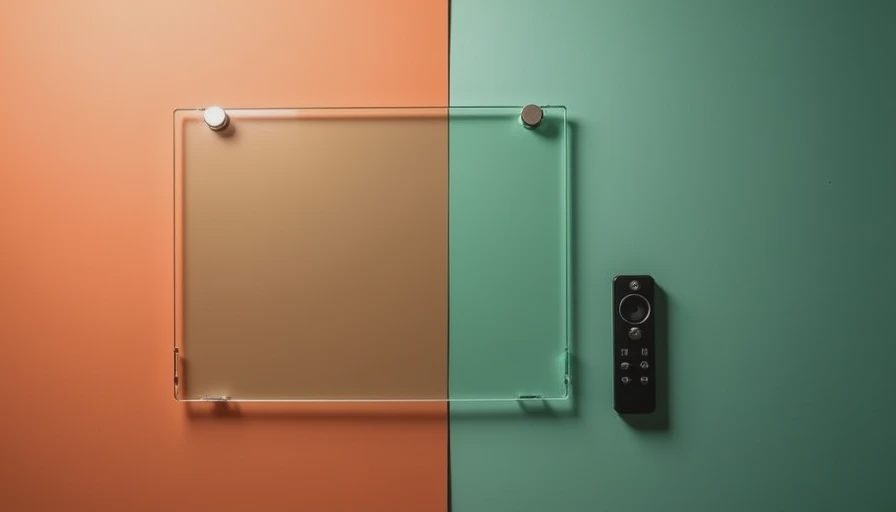
If you're mid-renovation and considering installing windows that can turn opaque, you're not just adding a cool party trick—you're future-proofing your home for privacy on demand. These smart glass solutions use an electrical charge to switch between clear and frosted states, and they require specific wiring before the drywall crew shows up. Trust me—I've cut this drywall open twice. Here's what you need to know.
These windows that can turn opaque work through a technology called PDLC (Polymer Dispersed Liquid Crystal) or electrochromic glass. PDLC is the most common for residential use: when power is on, the liquid crystals align and the glass is clear; cut the power, and they scatter randomly, making the glass opaque. Some systems also offer a dimmable tint. Electrochromic glass uses a low-voltage film that changes opacity gradually, but it's more expensive and typically used in commercial settings. For most homeowners, PDLC windows that can turn opaque offer the best balance of cost and functionality.
What to Wire Before Drywall
The installation of windows that can turn opaque involves power and control wiring. Here's the game plan:
- **Run a 120V outlet to the window location.** Smart glass typically requires a transformer (usually 12V or 24V) that plugs into a standard outlet. If you're framing a new window, ask your electrician to add a dedicated outlet within 3 feet of the window. I recommend a low-voltage raceway or EMT conduit from the outlet to the window frame for a clean look.
- **Install a switch or smart controller.** You can control your windows that can turn opaque with a wall switch, a remote, or a home automation system. If you're going smart, pull a Cat5e or Cat6 cable from the switch location to your home network hub. For integrated control, use a Z-Wave or Wi-Fi relay module that fits in a standard junction box.
- **Leave a service loop.** The control wire from the glass must reach the transformer. Most manufacturers provide a harness with 6–10 feet of cable. Cut a generous opening in the header or jamb to allow for future adjustments. Trust me—you don't want to fish new wire after the trim is installed.
Product Options and Costs
Several companies manufacture windows that can turn opaque for residential use. View Smart Glass is a premium option with electrochromic technology, but it runs around $100–$150 per square foot. For a more budget-friendly PDLC solution, check out Sonte Films, which offers retrofit film for existing windows (about $20–$30 per square foot) or framed smart glass panels that connect via plug-in transformer. Polyvision also makes PDLC glass with a faster switching time (under 1 second) and a 10-year warranty. If you're building custom windows, talk to a local glass fabricator who can supply framed PDLC units compatible with standard window openings.
Remember to factor in the cost of the controller, wiring, and installation. A typical 3x5-foot smart window can cost $800–$1500 installed. That's a premium, but the privacy benefit—especially for bathrooms, home offices, or street-facing rooms—is hard to beat.
Energy Efficiency and Other Considerations
Windows that can turn opaque also provide energy savings. In the opaque state, PDLC glass reduces solar heat gain by up to 40%, which can lower cooling costs. Some electrochromic windows even adjust tint automatically based on sunlight. However, not all smart glass is low-e; if you need thermal insulation, ask for IGU (insulated glass unit) versions with double or triple panes.
One common mistake: assuming you can install these windows without planning for the transformer. The transformer must be accessible for maintenance, so don't bury it in the wall. Use an outlet inside a cabinet or closet near the window. Also, verify your electrician is familiar with low-voltage wiring. Smart glass voltage is under 24V, but the line-voltage outlet requires a licensed pro.
Frequently Asked Questions About Windows That Can Turn Opaque
**Can I install windows that can turn opaque myself?**
Yes, if you're handy with electrical work—but the transformer wiring and low-voltage connections must be done correctly. For retrofit film kits, you can apply the film yourself, but for framed smart glass, I recommend a pro for the electrical rough-in.
**How long do these windows last?**
Most PDLC windows have a lifespan of 10–20 years. The film can degrade with UV exposure, so choose a product with a UV-stabilized coating. Electrochromic glass tends to last longer but costs more.
**Do windows that can turn opaque require special cleaning?**
No, they clean like regular glass. Avoid abrasive cleaners, as they can scratch the film. Use a soft cloth and mild glass cleaner.
**Can I add smart glass to existing windows?**
Yes, with a retrofit film kit. Sonte Films and others offer adhesive PDLC film that you apply to the inside of your existing window. It connects to a small transformer that plugs into a nearby outlet. This is a great way to test the technology before committing to a full window replacement.
Final Thoughts
Wiring for windows that can turn opaque isn't complicated—it just requires forethought. Run the power and control lines before insulation goes in, and you'll have a seamless privacy system that you can control from your phone or a wall switch. If you're already installing smart home automation, integrate the glass with your occupancy sensors for automatic privacy when you enter a room. The time to run this wire is when the studs are still singing. Ask your electrician about this before they button up.




No letters yet — pray write the first.