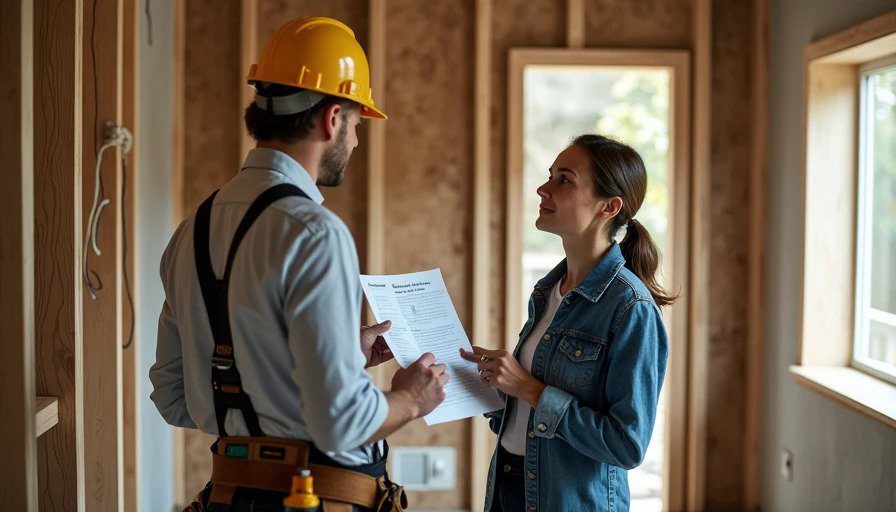
I'm three weeks into my renovation and I've already had The Conversation. You know the one. I handed my GC my electrical spec – neutrals at every switch box, deep boxes, dedicated circuits for the network rack. He looked at it, chuckled, and said: "We never do that. Nobody does that. You don't need that."
I stood there in my gutted kitchen, holding a printout of every forum post I've read, and felt my confidence evaporate. He's the pro. He's been doing this for 25 years. Who am I to tell him how to wire a house?
But here's the thing: I'm the one who has to live with it. He gets to walk away. I get to stare at a switch box with no neutral and wonder why my smart dimmer won't turn on.
So I pushed back. And I won. Not because I was louder – but because I was prepared. Here's exactly what I said, how I said it, and what I learned. Use this as your script.
Why they say 'we never do that'
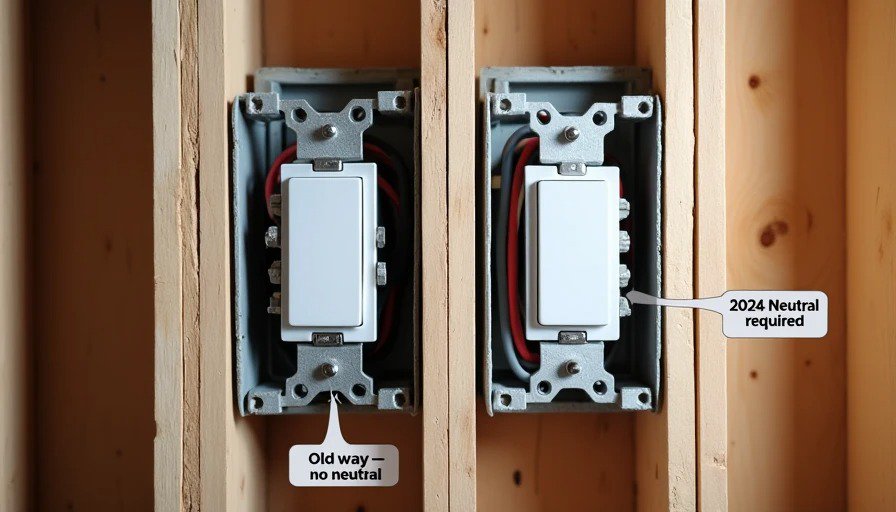
First, understand where they're coming from. It's not malice – it's habit. Most electricians and GCs have been wiring houses the same way for decades. The old way: power comes into the light fixture first, then a 14/2 cable drops down to the switch. That gives you a hot and a switched leg – but no neutral in the switch box. And it worked fine for 50 years of dumb switches.
So when you ask for a neutral at every switch, you're asking them to change their default behavior. That means:
More wire (14/3 instead of 14/2)
More box fill (bigger boxes or more careful packing)
More time (terminating that extra white wire)
More thinking (tracking which neutral goes where)
To them, it feels like over-engineering. To you, it's the difference between a smart home and a regret.
The good news: the 2023 NEC (and 2024 updates) now requires a neutral at most switch locations for new work. So your request isn't just smart – it's code-compliant. And that's your first and strongest argument.
The arguments that actually worked for me
Here are the specific arguments I used, in the order I deployed them. I didn't win in one sentence – I won in a conversation that took about 45 minutes, spread over three conversations.
1. "It's not optional – it's code now"
I opened with the code card. I had the relevant 2023 NEC section already bookmarked on my phone. I didn't wave it in his face – I just said: "I checked with the building department, and they confirmed that neutrals are required at most switch locations under the 2023 NEC. I don't want to fail inspection."
This shifts the conversation from "what you want" to "what the code requires." He can argue with you – but he can't argue with the inspector. I saw his face change when I mentioned the building department.
Your move: Look up your local code adoption status. If your jurisdiction is on 2023 NEC or later, you have a legal requirement, not a preference.
2. "I'm installing smart switches that require a neutral"
This sounds obvious, but you need to be specific. I said: "The dimmers I'm installing require a neutral – not just for power, but for the Wi-Fi radio and the dimming logic. If there's no neutral, they don't work. I've already bought the switches and they're sitting in my garage."
I didn't actually have them in my garage (I was still choosing), but I made it sound like a done deal. The point: he's not debating "maybe I'll want a smart switch someday." He's debating "this is a fixed requirement for the gear I already own."
Your move: Pick a specific model of smart switch. Look up its specs. Say its name. "The Inovelli Blue switches require a neutral – that's what I'm using." It makes it real.
3. "I'm willing to pay for the extra wire"
Money talks. I said: "I know 14/3 costs more than 14/2, and I know it takes longer to pull. I'm happy to pay the difference in material and labour. Just quote me the upcharge and we'll add it to the budget."
This defuses the "it's too expensive" objection. And when I saw the quote – about $300 more for the whole house – I realised it was negligible compared to the overall renovation cost. The GC saw that too.
Your move: Ask for a quote on the upcharge. You'll likely find it's less than you think. It's harder to refuse when you're offering to pay.
4. "This isn't just for me – it's for the next owner"
I played the resale card. "If I sell this house in five years, 'neutral at every switch' will be the new standard. Buyers will expect it. I'm not doing this for me – I'm doing it for the house."
This makes it feel less like a personal indulgence and more like a building upgrade. Some GCs care about resale. Even if yours doesn't, it's worth trying.
Your move: Frame it as future-proofing, not personal preference.
5. "I want to avoid cutting drywall later"
The closer. I said: "I've seen photos of people who skipped neutrals and ended up cutting drywall to run new cables. I don't want to be that person. I'd rather spend the money now than pay for drywall repair in two years."
This is the cautionary tale that actually resonates. No one wants to cut drywall. And they know it's expensive.
Your move: If you can, pull up a photo from the Crash Archive and show it to them. Visuals work.
What didn't work
I also tried a few things that didn't work – so you don't waste your breath.
"My friend who works in tech said..." – Don't. They don't care what your friend said. They care about code, cost, and practicality.
"I read online that..." – See above. "Online" is not a credential.
"All the smart home YouTubers do this..." – They don't watch YouTube. They watch football.
Keep your arguments grounded in code, cost, and consequences.
The script I used
Here's the actual script I used on the third conversation, when I had to close the deal:
"I know this isn't how you usually wire houses, and I respect that. But here's where I'm coming from: the 2023 NEC requires neutrals at most switch locations. I've checked with the building department. I'm also using specific smart switches that require a neutral – I've already bought them. I understand this means more 14/3 and more time, and I'm happy to pay the upcharge – just tell me what it costs. I'd rather spend $300 now than cut drywall later. Can we make this work?"
It worked. He didn't love it – but he agreed.
What to do if they still refuse
If they absolutely refuse, you have three options:
Find a different electrician. This is hard in a tight labour market, but possible.
Run the neutrals yourself. This depends on local codes, but in some jurisdictions you're allowed to do low-voltage or even line-voltage work on your own property. Check with your building department first.
Compromise. Ask for neutrals in most locations – at least the ones you know you'll use for smart lighting. You don't need one in the attic light or the garage storage room. Prioritise.
But in most cases, if you're prepared and reasonable, they'll come around.



No letters yet — pray write the first.