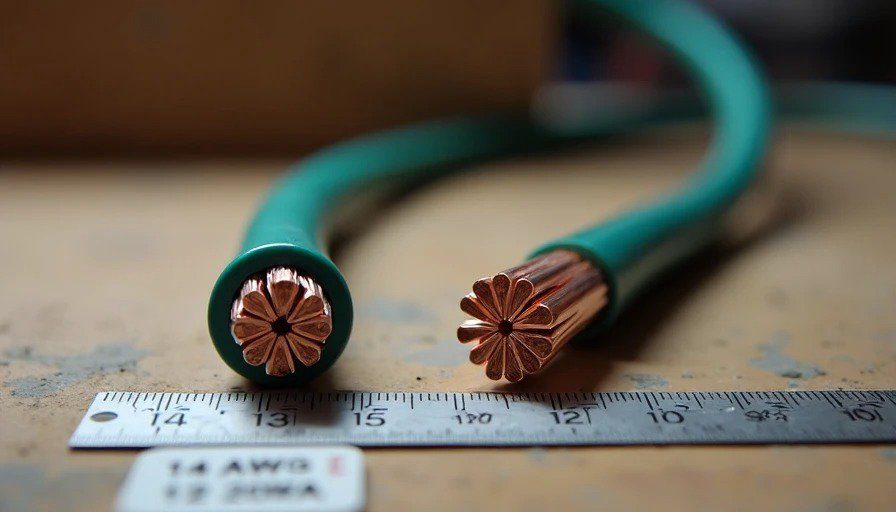
I’m deep in the spec-writing phase for my rough-in, and I’ve hit a decision that’s smaller than conduit-versus-no-conduit but somehow more annoying: 14-3 or 12-3 for switch boxes?
On the surface, it sounds simple. 14-gauge for 15-amp circuits, 12-gauge for 20-amp circuits. Done. But the more I dig, the more I realise this isn’t just about following the wire gauge chart. It’s about smart switches, 3-way configurations, box fill, future loads, and the fact that 2026 isn’t 2006.
So I’m putting this to the forum: if you were speccing a whole-house smart-ready rough-in today, what‘s your default – 14-3 or 12-3 – and why?
The baseline: what the numbers actually mean
Let’s start with the obvious. The “14” and “12” refer to American Wire Gauge (AWG) – the thickness of the copper conductor. 12-gauge is thicker, carries more current, and has less resistance. Here’s the hard rule:
14-gauge wire is rated for 15-amp circuits.
12-gauge wire is rated for 20-amp circuits.
You cannot put 14-gauge wire on a 20-amp breaker. The breaker protects the wire, not the device. A 20-amp breaker expects wire that can safely carry 20 amps – that‘s 12-gauge minimum.
So the first decision isn‘t really 14 vs 12. It’s 15-amp vs 20-amp circuits. Everything else flows from that.
The “3” part: why you need three conductors (not two)
The “/3” means the cable has three insulated conductors plus a ground – typically black, red, white, and a bare ground. A “/2” cable has only black, white, and ground.
Why does the third conductor matter?
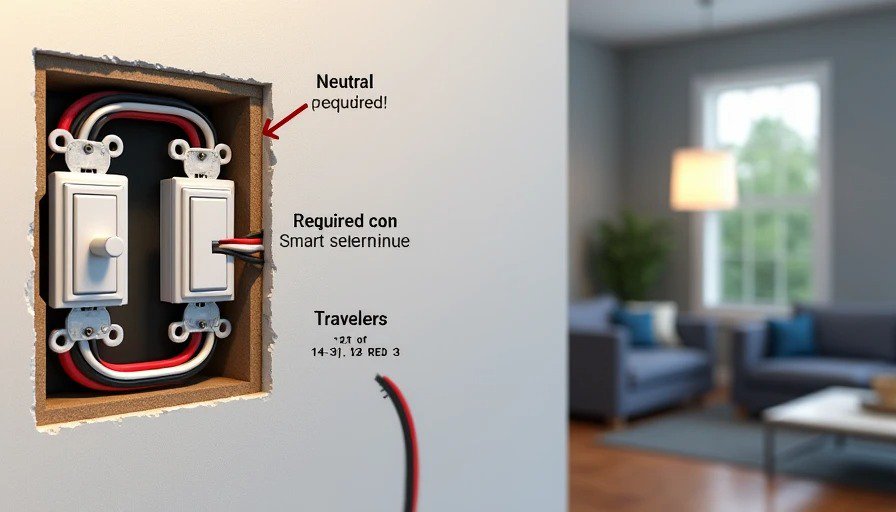
Reason one: 3-way switches. If you have a light controlled from two locations (top and bottom of stairs, both ends of a hallway), you need two traveler wires between the switches. That requires a 3-conductor cable – 14/3 or 12/3.
Reason two: neutrals in switch boxes. Modern code (and every smart switch on the market) requires a neutral wire in the switch box. If power comes into the light fixture first and only a 2-conductor cable runs down to the switch, you have no neutral at the switch. Running 14/3 or 12/3 instead of 14/2 gives you that extra white wire to serve as the neutral.
Reason three: ceiling fans with lights. If you want separate control of the fan and the light from the same switch box, you need two switch legs – which means three conductors.
So if you‘re doing any of these – and in a modern smart home, you probably are – /3 is the minimum. The question is just the gauge.
The case for 14-3 as default
Here’s the traditional argument: lighting circuits don‘t need 20 amps.
A typical 15-amp circuit at 120 volts gives you 1,800 watts of capacity. That’s a lot of LEDs. Even with a whole room of recessed lights, you‘re probably under 200 watts. The breaker isn’t the bottleneck – the number of fixtures is.
So why pay more for thicker wire? 14/3 is cheaper per foot, easier to pull, and easier to terminate in crowded switch boxes. Most electricians will tell you that 14-gauge is the standard for lighting – and they‘re not wrong.
For a pure lighting circuit with no high-draw devices, 14/3 on a 15-amp breaker is perfectly safe, fully code-compliant, and cost-effective.
The 14-3 camp says: “Run 14/3 everywhere for switches. Save 12/3 for the kitchen, the garage, and dedicated appliance circuits. You’re not plugging a space heater into a light switch.”
The case for 12-3 as default
Here‘s where it gets interesting – and where I think the 2026 answer might be different from the 2016 answer.
Argument one: smart switches aren’t just switches anymore. A smart dimmer might draw a few watts to stay connected to Wi-Fi or Zigbee. That‘s fine. But what about the load it controls? More homeowners are putting LED tape lighting, motorised blinds, powered shades, and even small exhaust fans on switch circuits. Some of these have inrush current. Some are inductive loads. The extra headroom of a 20-amp circuit isn’t crazy – it‘s prudent.
Argument two: you might want to repurpose that circuit later. Today it’s a lighting circuit. Next year you decide to add a wall-mounted tablet that needs charging, or a PoE injector, or a small appliance in the mudroom. With 12-gauge wire and a 20-amp breaker, you have options. With 14-gauge, you‘re capped.
Argument three: voltage drop over long runs. If your switch box is 100 feet from the panel, 14-gauge wire has more resistance than 12-gauge. For a simple switch, it doesn’t matter. For a smart switch that‘s sensitive to voltage fluctuations? It might.
Argument four: box fill is tighter, but not impossible. Yes, 12-gauge is thicker and takes up more space in the box. But if you’re speccing deep boxes (which you should be for smart switches anyway), it‘s manageable. This isn’t a reason to avoid 12/3 – it‘s a reason to plan your boxes properly.
The 12-3 camp says: “The cost difference is pennies per foot compared to the cost of drywall repair. Run 12/3 everywhere and never think about ampacity again.”
The gotcha: you can’t mix and match on the same circuit
Here’s the rule that trips people up: the breaker determines the minimum wire gauge for the entire circuit. If you put a 20-amp breaker on a circuit, every piece of wire on that circuit must be at least 12-gauge-. You can‘t run 12-gauge from the panel to the first junction box and then switch to 14-gauge for the switch legs. The weakest link determines the circuit’s capacity-.
So the decision isn‘t per-switch. It’s per-circuit. If you want the flexibility of 20-amp capacity anywhere on that circuit, you‘re committing to 12-gauge everywhere on that circuit.
What the 2023 NEC actually requires
The 2023 National Electrical Code (effective in most jurisdictions as of January 2023-) requires a neutral at most switch boxes for new work-. That means you can’t use the old “switch loop” method with 14/2 anymore – you need a 3-conductor cable to bring the neutral down to the switch-.
So 14/3 or 12/3 is required, not optional, for most new residential switch locations-. The gauge decision is still yours – but the “/3” part is settled.
My current thinking (and where I need your help)
I’m leaning toward 12/3 as my default for all switch boxes, with 15-amp breakers on most lighting circuits and 20-amp breakers on circuits that might get repurposed.
Why? Because the cost difference is small, the box-fill concern is solvable with deep boxes, and the flexibility of 12-gauge means I never have to think “can this circuit handle that” ever again. I’d rather overspec the wire and underspec the breaker than the reverse.

No letters yet — pray write the first.