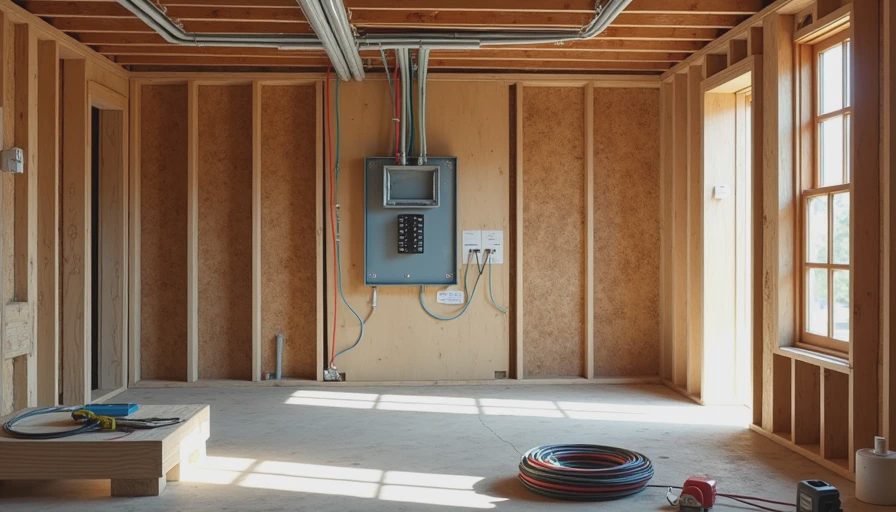
I’ve been lurking here for about three months, reading every “what I wish I’d known” thread and taking notes like it’s a final exam. And now it’s real: my rough‑in inspection is scheduled for next Thursday. The electrician starts pulling wire on Monday. The studs are bare, the panel is mounted, and I have exactly seven days to make sure I don’t become a Crash Archive feature story.
I’m not an electrician. I’m a software engineer who once replaced a light fixture without turning off the breaker (don’t ask). But I’ve spent enough time on this forum to know that the decisions made in the next 48 hours will either make my smart home sing or turn me into a drywall cutter in 2027.
Here’s the context: 1970s ranch, full gut renovation, 2,000 sq ft, two floors plus an unfinished basement. I’m going all‑in on smart lighting, motorised blinds, occupancy sensors, and a hard‑wired security system. I’ve already specced a 40‑space panel, pulled Cat6 to every room, and demanded a neutral in every switch box – much to my GC’s annoyance. But I know that’s just the basics. What I need from you veterans is the real checklist – the things that don’t show up on the permit drawings, the five items that separate a “pass” from a “why didn’t I think of that?”
I’ve drafted my own Top 5, but I’m 90% sure I’m missing something obvious. So please, tear this apart and add your wisdom.
1. Conduit – how much is enough?
I specified ¾” EMT from the panel to the attic and to the media wall, plus a dedicated 1” run to the kitchen island for future induction cooktop data. My electrician thinks I’m over‑engineering. He says “nobody pulls new wires in a ranch – you just use what’s there.” But I’ve read too many stories of people who wanted to add a fibre‑optic HDMI or a second Cat6 for a PoE camera and ended up fishing through insulation.
My plan: conduit to every place I can imagine wanting a new cable in the next 10 years – including the front porch (for a video doorbell that might need more than two conductors), the eaves for security cameras, and the garage for an EV charger data link.
The question: Is full‑house conduit actually worth the material and labour, or am I falling for the “more is better” trap? If you’ve done it, did you ever use those empty pipes? If you skipped it, what’s the one run you regret not putting in?
2. Neutral at every switch – but what about the depth of the boxes?
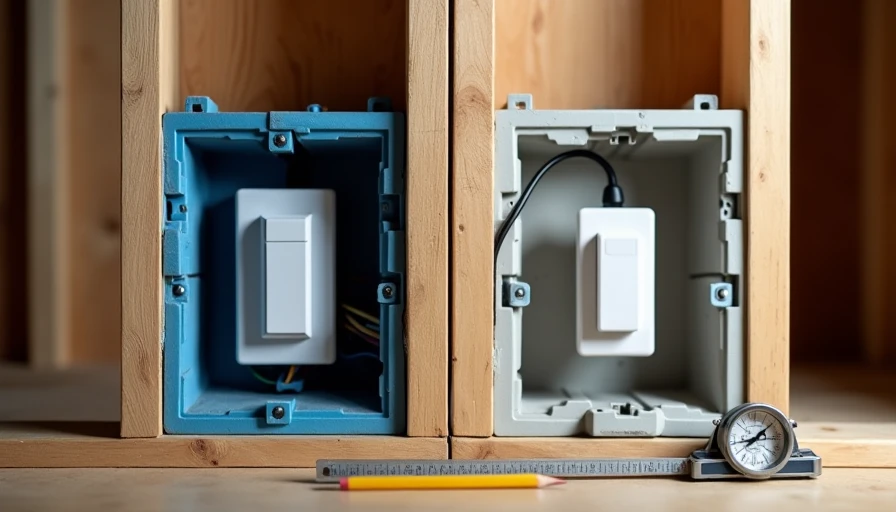
I’ve been adamant: 14‑3 to every switch location, neutral tied through, and all boxes deep enough for smart dimmers. My spec says “minimum 3” deep” for single‑gang boxes. But when I walked the job site yesterday, I saw the electrician had nailed up plastic old‑work boxes that are barely 2¼” deep. When I pointed it out, he said “that’s what the supply house had” and that “nobody uses deep boxes for switches.”
I know that a typical smart dimmer (like a Lutron Caseta or a Zooz Zen72) needs about 1.5” of clear depth plus wire nuts and pigtails. I’ve seen photos of boxes crammed so tight that the dimmer sits proud of the wall by ¼”. That’s not acceptable.
The question: What’s the minimum box depth you’d insist on for a single‑gang switch that’s controlling a load and has a neutral bundle? And is it worth ordering my own metal 4” square boxes with plaster rings to guarantee space, even if it slows down the electrician? Any tips on how to push back without sounding like a know‑it‑all?
3. Low‑voltage – where does the structured media cabinet really go?
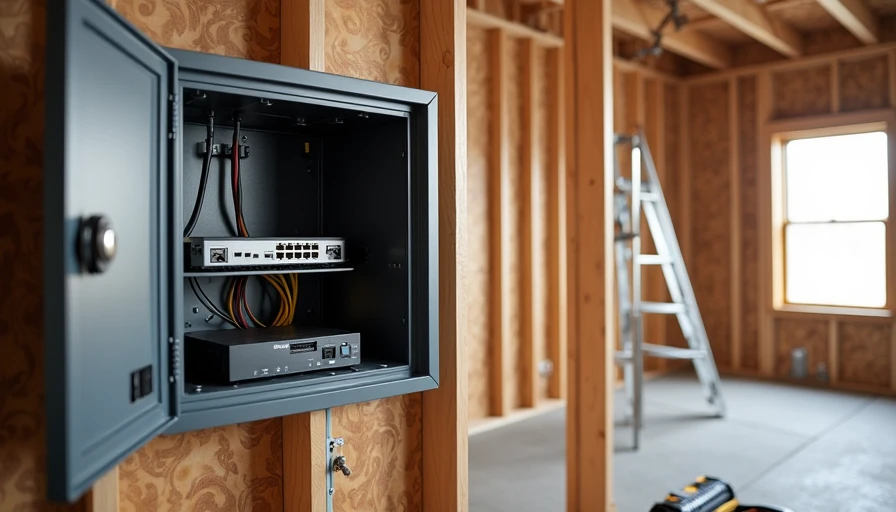
I’ve planned a 42” structured media enclosure in the basement, right below the main electrical panel. It’ll house the modem, router, a 24‑port PoE switch, and a Home Assistant server. All Cat6 runs will home‑run to this cabinet, with service loops.
But I’m second‑guessing the location. The basement is unfinished now, but in five years I might finish it, and that wall might become a home theatre. Should I instead put the cabinet in a dedicated closet on the main floor, closer to the living areas where Wi‑Fi needs to reach? My electrician says “basement is fine,” but I’ve read that Wi‑Fi from a basement often struggles to reach second‑floor bedrooms, and even with multiple access points, the backhaul is better if the switch is central.
The question: Where did you place your structured wiring hub, and what would you change? If I keep it in the basement, what’s the minimum distance from the electrical panel to avoid EMI? And should I run two extra Cat6 lines from the cabinet to the attic, just in case I want to move the switch upstairs later?
4. Wire labelling – what system actually works six months later?
I’ve bought a label maker and a roll of numbered tags. My plan: every wire gets a unique ID – e.g., “BR‑SW‑01” for bedroom switch #1 – and I’ll keep a spreadsheet mapping that to the panel breaker and the device it controls. But I know that in reality, electricians write on the sheathing with a sharpie, and those marks fade or get covered in drywall mud.
I’ve seen people use heat‑shrink labels or even QR codes, but that seems overkill.
The question: For those of you who’ve been through this, what labelling method actually survives the drywall, paint, and subsequent years of digging through the panel? Do you label both ends? Do you use a wire‑tracer to re‑identify later, or do you just rely on toners? And is it worth taking a high‑res photo of every junction box before drywall, with a ruler in the frame for scale?
5. The “inspector gotcha” – what code detail do inspectors love to fail?
I’ve read the 2023 NEC articles that apply to residential, but I’m not an expert. I know about AFCI/GFCI requirements, box fill calculations, and the support intervals for NM cable. But I’ve heard that local inspectors have their own pet peeves – like not having a clear working space in front of the panel, or missing a ground rod bonding clamp, or using the wrong type of staple for Romex.
My electrician is licensed and says “don’t worry, I’ll handle it.” But I’ve also read that many electricians treat smart‑home pre‑wires as “extra” and forget that the inspector might actually care about low‑voltage cabling being separated from high‑voltage by at least 2 inches, or that the conduit fill percentage is strictly enforced.
The question: What’s the single most common inspection failure you’ve seen in smart‑ready rough‑ins that caught you off guard? And if you could give me one piece of advice to walk the job site with my own checklist before the inspector arrives, what would it be?
Bonus – what did I completely miss?
I’m sure there’s something huge I haven’t even thought about. Maybe it’s the wire gauge for the range circuit that might need a neutral for a smart oven. Maybe it’s the placement of occupancy sensors in corners where the studs are too close together. Maybe it’s the fact that I didn’t spec a dedicated circuit for the network equipment, and now I’ll have flickering lights every time the server boots.
So here’s my plea: If you had one do‑over from your own rough‑in, what would it be? Not the obvious stuff – I already know neutrals and Cat6. I’m talking about the subtle, site‑specific, “I should have moved that box six inches to the left” kind of wisdom that only comes from standing in a room full of studs and realising you’ve made a permanent choice.
I’ll be on site Monday morning with my camera, my label maker, and a notebook. I’ll update this thread with what I actually do, and I promise to pay it forward when I’m on the other side. Thank you in advance – you’re saving me from a future drywall bill.
No letters yet — pray write the first.