I’m writing this from my finished living room, staring at a smart switch that doesn’t work the way I wanted. It’s not the switch’s fault. It’s not the electrician’s fault. It’s mine – for not reading the 2024 National Electrical Code (NEC) updates before I told my electrician to “just wire it like you always do.”
Turns out, “like you always do” was based on the 2017 code. And a lot has changed. I passed inspection, but I passed with a list of compromises that I now have to live with – or pay to fix later. So consider this your public service announcement: if your rough‑in is scheduled for 2025 or later, stop and read this first.
Here are the four 2024 NEC changes that caught me completely off guard – and what I wish I’d done differently.
1. The neutral requirement is now stricter (and applies to more places)
I already knew that 2020 NEC required a neutral at most switch locations – but 2024 NEC tightened the wording and closed a few loopholes. The big one: switch boxes that control lighting loads in attics, crawlspaces, and utility rooms now require a neutral as well. In the past, some inspectors allowed a switch loop without a neutral if the location was considered “unfinished” or “not intended for smart devices.” That exception is basically gone.
I have a three‑way switch controlling the attic lights – the top of the stairs and the switch at the attic entrance. My electrician ran 14/2 from the fixture to the first switch, then 14/3 to the second switch. No neutral at the first switch. That passed inspection in 2020. In 2024, it’s a violation. The inspector flagged it, gave me a pass with a warning, and now I have a switch box with no neutral – which means I can’t use a smart switch there unless I rewire the whole run.
What I should have done: Specified 14/3 to every switch box, no exceptions, even the ones that felt like “out of the way” locations. I saved maybe $50 in wire and paid for it with lost functionality.
2. GFCI protection now covers more than just kitchens and baths
The 2024 NEC expanded GFCI requirements to include:
All basement receptacles, including those for utility sinks and washing machines
All garage receptacles, including ceiling‑mounted garage‑door openers
All outdoor receptacles, including those on balconies, decks, and porches
All receptacles within 6 feet of any sink – even in laundry rooms and workshops
And – this one got me – receptacles in crawlspaces that are accessible for service
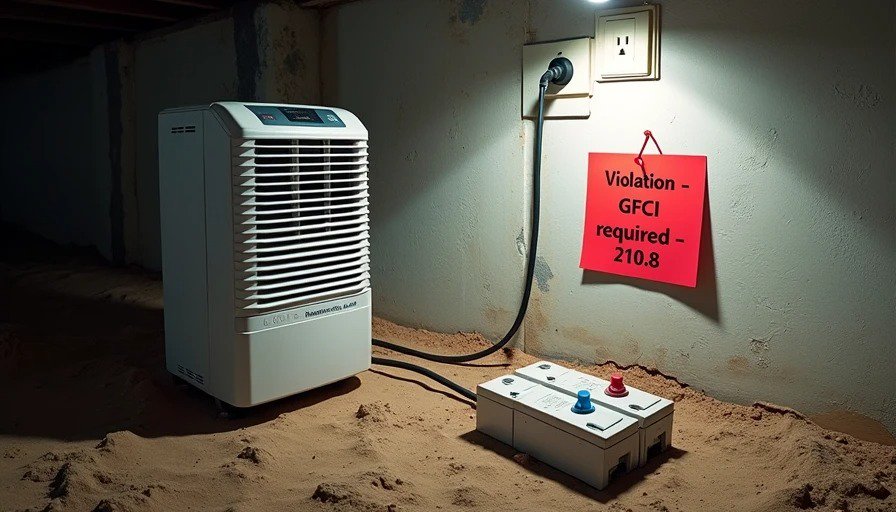
I have a crawlspace entrance in my utility room. I ran a single receptacle down there for a dehumidifier. No GFCI – because I didn’t think it was required. The inspector made me install a GFCI breaker, which cost me $80 and a panel re‑wire. Worse, my electrician had to open the panel and move some circuits around to accommodate the new breaker. That added two hours of labour.
What I should have done: Planned for GFCI breakers or GFCI receptacles in every location that might be affected – and accounted for the extra panel space. I would have also checked if my electrician’s standard practice was already up to date. It wasn’t.
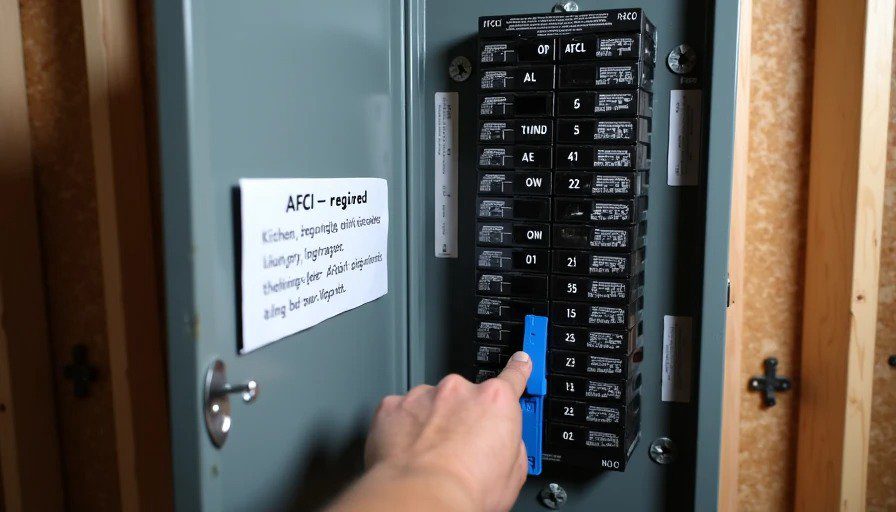
3. AFCI protection is now required on more circuits
This one I sort of knew, but I didn’t realise how broad it became. 2024 NEC requires AFCI protection for all 120‑volt, 15‑ and 20‑amp branch circuits that supply outlets or devices in nearly every room – including the kitchen, laundry, and even the garage if it’s attached to the house.
The exception? Bathrooms and unfinished basements are still exempt (for now), but everything else is fair game.
I have a dedicated circuit for my network rack – a 20‑amp, 12‑gauge run just for the server, switch, and UPS. My electrician put it on a standard breaker. The inspector noted that this circuit serves a receptacle in the living room (the rack is in a closet adjacent) and should have been AFCI‑protected. I had to swap the breaker for an AFCI, which cost $55 and introduced a nuisance tripping issue because of my UPS – now I have a new problem to solve.
What I should have done: Assumed that all lighting and receptacle circuits (except those in the bathroom) would need AFCI breakers, and spec’d them upfront. Also, I should have researched which devices don’t play well with AFCI – UPS and variable‑speed motor loads are notorious offenders – and planned for separate, non‑AFCI circuits where code allows (like dedicated circuits for sump pumps or refrigerators, which have exceptions).
4. EV‑ready pre‑wiring is now a requirement in many jurisdictions
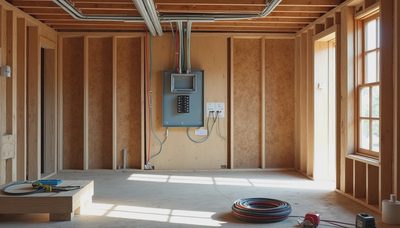
This isn’t strictly a NEC national mandate, but the 2024 cycle strongly encouraged local adopters to include EV charging infrastructure in new or substantially renovated homes. Many states have already added amendments requiring a dedicated 40‑amp, 240‑volt circuit (or at least a 1‑inch conduit) to the garage or parking area – for future EV chargers.
I didn’t have a garage at the time (I have a carport), so I thought I was exempt. But my jurisdiction’s amended code required a conduit run from the panel to the carport, terminated in a box, even if I didn’t install a charger yet. I didn’t know, and the inspector flagged it during final inspection – after the walls were closed. I now have to cut a trench in my driveway and run conduit outside, which is going to be expensive.
What I should have done: Checked with the building department before rough‑in for any local amendments that went beyond the base NEC. They have a one‑page handout that lists all the local add‑ons. I didn’t ask for it.
Bonus gotcha: junction boxes must be accessible – and labeled
This one is technically from previous code, but enforcement is stricter now. All junction boxes must remain accessible – no hiding them behind drywall, cabinets, or fixed shelving. I have a J‑box in my kitchen island that I assumed would be hidden but still accessible by removing a drawer. The inspector said that wasn’t “readily accessible” and made me relocate it. That meant cutting open the island, moving the box, and re‑drywalling a section.
I also learned that all circuits must be identified at the panel with a clear schedule – not just “lights” but specific room names. I had a messy panel schedule and got a correction notice. It took me an hour to trace everything and label it properly.
What I wish I’d done differently – a simple checklist
If I could go back to the week before rough‑in, I’d do these five things:
Request the latest NEC code book (or at least the summary of changes) and read the sections on AFCI, GFCI, and neutral requirements. I’d highlight every change since 2017.
Ask the building department for their local amendments – they often add stricter rules, not looser ones.
Tell my electrician explicitly: “I want everything to current 2024 NEC – not just what you’re used to. If you’re not sure, we look it up together.”
Budget for AFCI and GFCI breakers from the start – they cost about $50–$60 each vs $10 for a standard breaker. That added $300 to my panel cost, which I could have planned for.
Take photos of every box before drywall – not just for documentation but to show the inspector if they question wire routing or box fill.
Now it’s your turn
I’m sharing this because I know I’m not the only one who walked into rough‑in with outdated assumptions. So here’s my question to the forum:
What 2024 NEC change surprised you the most during your own rough‑in? Anything else I missed?
For the pros: what’s the most common code violation you’re seeing from homeowners who “did their research” but used a 2017 guide?
And for the brave: did you actually get a correction notice that delayed your project? How much did it cost you?
Don’t be me – read the code, ask the questions, and over‑spec the wire. The drywall is cheaper than a rewire.

No letters yet — pray write the first.