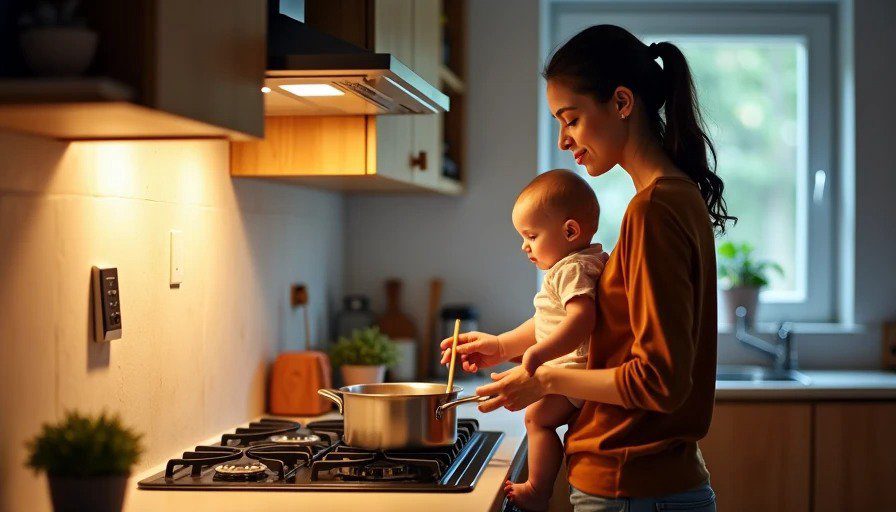
Let me start with a confession: I'm not a Luddite. I work in tech. I carry the latest phone. I appreciate a good automation. But when my husband started talking about "smart switches everywhere" – every single switch in the house connected to the internet, controlled by apps and voice commands – I felt a visceral resistance.
I couldn't articulate it at first. I just knew I didn't want to tap my phone to turn on the bathroom light at 3am. I didn't want to explain to my parents how to work the guest room switch. I didn't want to be locked into an app that might get discontinued, or a protocol that might become obsolete, or a company that might go out of business.
He, on the other hand, had spent months on this forum. He'd drawn wiring diagrams. He'd spec'd neutrals and conduits and Cat6 runs. He had a spreadsheet of every switch, every load, every automation. He was building a smart home, and he wanted it to be smart.
We had a lot of conversations about it. Some were productive. Some were less so. But eventually, we found a compromise that actually works – and I'm sharing it because I suspect we're not the only couple with this dynamic.
The argument – why I wanted dumb
Let me be clear about my objections, because they weren't just stubbornness:
1. Reliability. Smart switches depend on Wi-Fi, power, and the cloud. If any of those fail, you're left with a dumb switch anyway – except you've paid extra for it. I didn't want to be in a house where I couldn't turn on the lights because the router was rebooting.
2. Complexity. My husband loves complexity. He loves apps, settings, schedules, scenes, and automations. I love simplicity. I wanted to walk into a room and flip a switch – not wait for a sensor to detect me, or for a schedule to trigger, or for the app to load.
3. Guest usability. We have elderly parents, babysitters, and friends who aren't tech-savvy. I didn't want to give them a tutorial on how to use the lights in the powder room.
4. Longevity. Smart home tech moves fast. I didn't want to be stuck with a system that was obsolete in five years – or worse, one that required a subscription or a cloud service that got shut down.
5. Aesthetic. I hate wall plates with extra buttons, or switches with LEDs that flash at night, or the general clutter of "smart" interfaces.
He heard all of this. He nodded. And then he said: "But I really want to automate some things."
The argument – why he wanted smart
He had his own list, and to be fair, it was a good one:
1. Convenience. He wanted to turn off all the lights from bed, or from the couch, without walking around the house. He wanted lights that followed him – turning on when he entered a room and off when he left.
2. Efficiency. He wanted schedules – lights that dimmed at sunset, turned off at 11pm, and came on gradually in the morning. He wanted to save energy and reduce our carbon footprint.
3. Future-proofing. He'd run all the wires. He'd put in the neutrals. He wanted to be able to take advantage of whatever came next.
4. Cool factor. I'll admit it – he wanted to show off. And I get that.
The compromise – our layered strategy
We didn't find a single solution. We found a layered one – different approaches for different rooms, based on how we actually live.
Level 1: Smart for convenience, dumb for simplicity
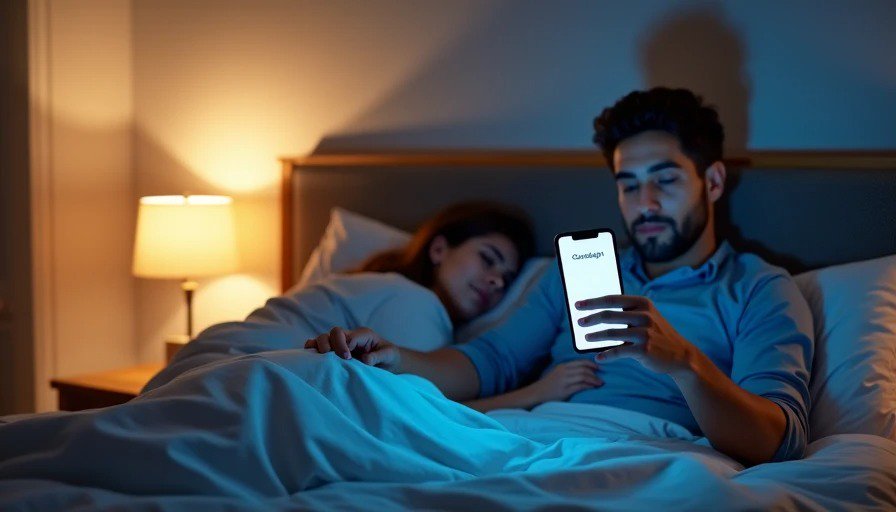
The smart areas:
Kitchen – Smart dimmer on the main lights. I love being able to control brightness with my voice when I'm cooking.
Living room – Smart dimmer on the overhead lights and a smart plug on the floor lamps. Movie night scenes are genuinely useful.
Master bedroom – Smart dimmer on the overhead lights and smart plugs on the bedside lamps. We have a "goodnight" routine that turns everything off.
Front porch – Smart switch with a timer. It turns on at sunset and off at 11pm, automatically.
The dumb areas:
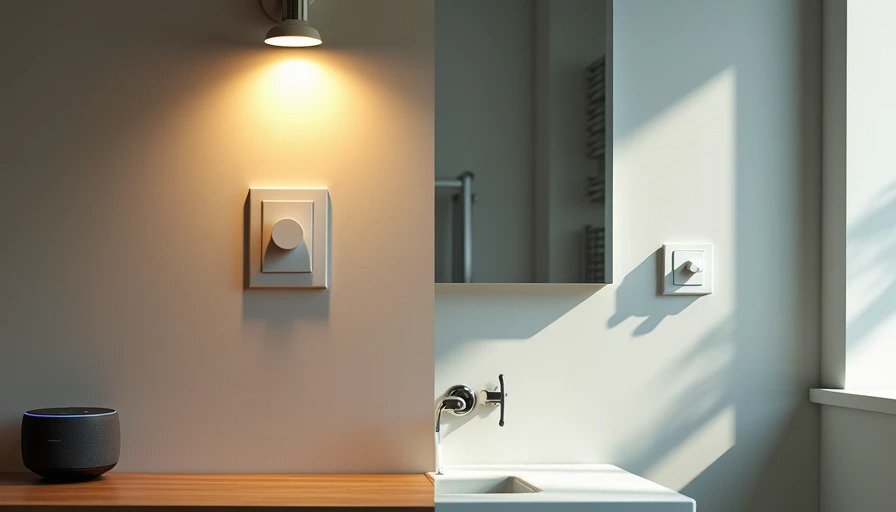
Bathrooms – Dumb switches, no smart anything. I want to walk in, flip the light, and not think about it at 3am.
Hallways – Dumb switches. No one needs to automate a hallway light.
Closets – Dumb switches. If we want a motion sensor, we'll use a battery-powered one.
Guest room – Dumb switches. I don't want to explain anything to my mother-in-law.
Level 2: Smart bulbs, not smart switches
For rooms where we wanted flexibility but didn't want to change the wiring, we used smart bulbs. The switches are still dumb, but the bulbs are connected to Zigbee.
Our approach:
Bedroom lamps – We used smart bulbs on the bedside lamps. They're controlled by the switch (they default to on if switched) but also by automations.
Living room floor lamps – Smart bulbs that are part of our movie scene.
Office – Smart bulb so I can adjust the temperature and brightness throughout the day.
The advantage: If we want to switch back to dumb, we just replace the bulb. The wiring is unchanged.
Level 3: "Hybrid" switches – the best of both
For a few locations – like the dining room and the family room – we used a hybrid approach: a smart switch that also has a physical button.
What we chose: Inovelli Blue Series switches. They have a physical paddle that feels like a normal switch, but they also have a configurable LED and they're Zigbee-enabled.
The advantage: I can walk in and flip the switch like a normal person. He can automate it from his phone. We're both happy.
The "manual override" rule
We agreed on one non-negotiable rule: every smart switch must have a manual override. If the Wi-Fi goes down or the hub fails, the switch should still work as a dumb switch.
That eliminated a few options (some brands don't have manual overrides), but it also gave me peace of mind. I'm never stuck in a dark room with a dead app.
The guest test
We invited my parents over for dinner, two weeks after we moved in. My husband set up a "guest mode" – automations paused, so the lights worked exactly like normal switches.
I watched my mom walk into the kitchen, flip the switch, and not even notice it was smart. She didn't have to ask how to turn it on. She didn't have to download an app. She just flipped it.
That was my win. My husband got his automations – and I got guests who didn't need a tutorial.
What we're still fighting about
We're not fully settled. We still have two unresolved debates:
1. The front door lock. He wants a smart lock with a keypad. I want a regular deadbolt. We're on hold on that one.
2. The thermostat. He wants a smart thermostat that learns our habits. I want a programmable one that I can set manually. We have a smart thermostat now, but I've overridden his schedules enough times that he's stopped fighting me on it.
What I'd tell someone in a similar position
Start with one room. Don't automate everything at once. Pick one room – maybe the living room or the kitchen – and test it. If it works for both of you, expand.
Agree on a "guest mode." Automations are fine, but guests don't care about scenes. They care about turning on a light.
Keep bathrooms dumb. Trust me – no one needs a smart switch in a bathroom. It's just a place you'll forget to automate anyway.
Use smart bulbs for flexibility. They're cheap, they're easy to replace, and they don't require rewiring.
Buy switches that support manual overrides. If the Wi-Fi fails, you still have a light.
Compromise on location, not on function. We didn't compromise on what a smart switch could do – we compromised on where we put them.
The final verdict
Our house is about 60% smart and 40% dumb. It's not the all-smart dream my husband originally wanted, and it's not the all-dumb simplicity I originally wanted. But it works.
I can turn on the kitchen lights with a flip. He can turn them off from bed. My parents can use the bathroom without a tutorial. And we haven't killed each other – which is probably the most important metric.
If you're in a similar debate, my advice is: talk about what you actually want, not what the tech can do. For me, it was about simplicity. For him, it was about convenience. Once we separated those two things, the compromise became obvious.


No letters yet — pray write the first.