I’m going to start with the part that still makes me smile, even six months later: my builder actually followed the spec.
Not entirely. Not perfectly. But close enough that when I walked through the finished house for the final inspection, I felt a genuine sense of relief. The neutral wires were there. The conduits were in place. The Cat6 runs were terminated and labelled. The smart home I'd designed on paper was actually, physically, real.
This is the story of that spec – what I put in it, how the builder reacted, and what I found when I finally walked through the finished house.
The backstory: why I wrote my own spec
I'm not an electrician. I'm not a builder. I'm a guy who spent six months reading forums, watching YouTube videos, and sketching wiring diagrams on graph paper until my wife started hiding the pencils.
But I knew one thing: if I didn't write the electrical spec myself, the builder would do it the way they always do – which means 14/2 to the switches, no neutrals, no conduit, and a single Cat6 drop to the office "because that's where the computer goes."
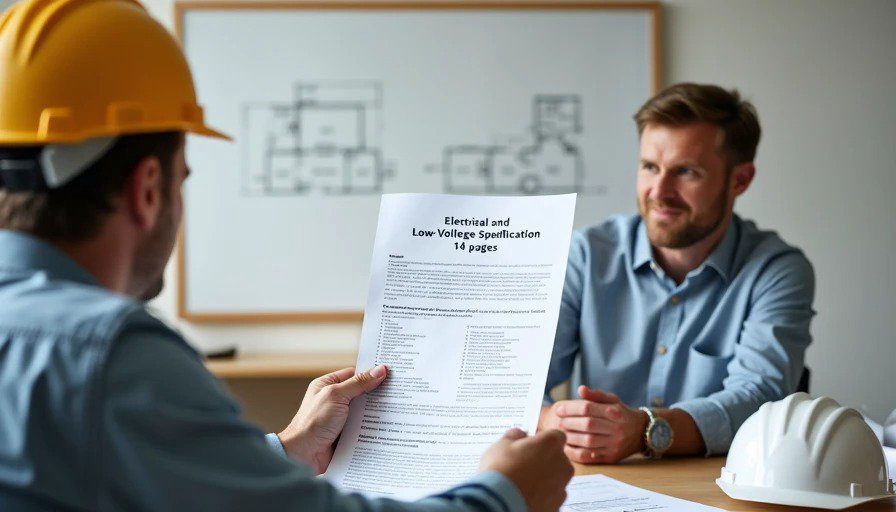
I wasn't going to let that happen. So I wrote a 14-page document called "Electrical and Low-Voltage Specification – [Project Name]" and handed it to the builder before they even broke ground.
The builder's project manager read it, looked at me, and said: "You've done this before, haven't you?"
I said: "No. But I've read a lot of forums."
He laughed. And then he actually read it.
The spec – what I put in it
Here's the abbreviated version of what I handed them. I've edited it down to the essentials – but trust me, the original had diagrams, tables, and a few footnotes that probably made the electrician roll their eyes.
General requirements:
All electrical work to comply with 2023 NEC (local amendments applied).
All switch boxes to be metal, minimum 3" deep, with 14/3 or 12/3 wiring as specified.
Neutral wire required at every switch location. No exceptions.
Dedicated 20-amp circuits for kitchen counter receptacles, bathroom receptacles, laundry, garage, and all outdoor receptacles.
AFCI/GFCI protection on all 15-amp and 20-amp branch circuits (except where code allows otherwise).
Low-voltage requirements:
Cat6 to every room – minimum two drops per room, home-run to structured media enclosure.
Coax to living room and media room (optional – I ended up skipping it).
Conduit – 1" EMT from panel to attic, media wall, garage, and kitchen island. ¾" conduit to front porch and each corner of the house for future cameras.
All low-voltage cables to be labelled at both ends with a permanent label.
Panel requirements:
60-space panel (yes, I upsized from 40).
Panel schedule to be completed and laminated on the inside of the panel door.
Each circuit to be labelled with a unique ID and mapped to a room/location.
Structured media enclosure:
42" enclosure in the basement, with dedicated 20-amp circuit.
Patch panel, switch, and router to be installed by the homeowner (me) – the builder was only required to terminate the cables and leave a service loop.
Special requests:
14/3 to all switch boxes (I explicitly listed the wire type).
Conduit to the media wall with a pull string.
Service loops of at least 2 feet at both ends of every cable.
The builder's response
I was nervous handing it over. I expected pushback – "we never do that," "that's overkill," "this will cost extra."
And to be fair, I got some of that. The electrician asked why I needed 14/3 everywhere. The project manager asked if I was building a data centre. But I'd prepared for that. I had my answers ready:
"Neutrals are required by code now – I'm just future-proofing."
"Conduit is cheap insurance. I don't want to cut drywall later."
"I'm willing to pay for the extra wire – just quote me the upcharge."
They quoted the upcharge. It was about $1,200 extra for the whole house. I said yes without blinking.
And then they got to work.
The final walkthrough – what I found
The final walkthrough happened about six months after we broke ground. The house was finished – paint, flooring, cabinets, everything. The panel was installed, the conduits were in place, and the low-voltage cables were terminated.
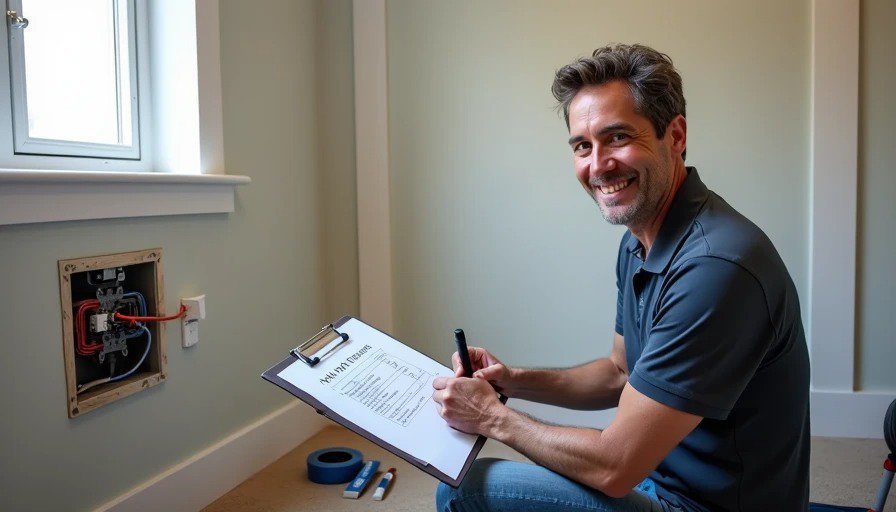
I brought my spec, a clipboard, and a flashlight. I spent three hours going through every room, checking every box, and comparing it to my original document.
Here's what I found:
The good:
Neutrals everywhere. Every single switch box had a neutral – just as I'd specified. I opened 20 boxes and found 14/3 in every one.
Conduit to the media wall. It was there, with a pull string and a service loop. I tested it by pulling a spare HDMI cable through – smooth as butter.
Deep boxes. Every switch box was a metal 4" square with a plaster ring – plenty of room for smart dimmers.
Cat6 drops. All labelled, all tested, all home-run to the enclosure.
Conduit to the attic and garage. Both in place, with pull strings and clear labels.
Panel schedule. They'd filled it out and laminated it – but they'd used their own abbreviations, so I had to decode a few of them. I ended up redoing it with my own label maker.
The not-so-good:
The structured media enclosure was mounted too high. They put it at eye level – which is fine for access, but it meant the patch panel was at shoulder height, and the cables had to bend sharply. I ended up lowering it myself (with permission).
The Cat6 terminations were a mess. They used a cheap punch-down tool and left about an inch of exposed pairs. I re-terminated half of them.
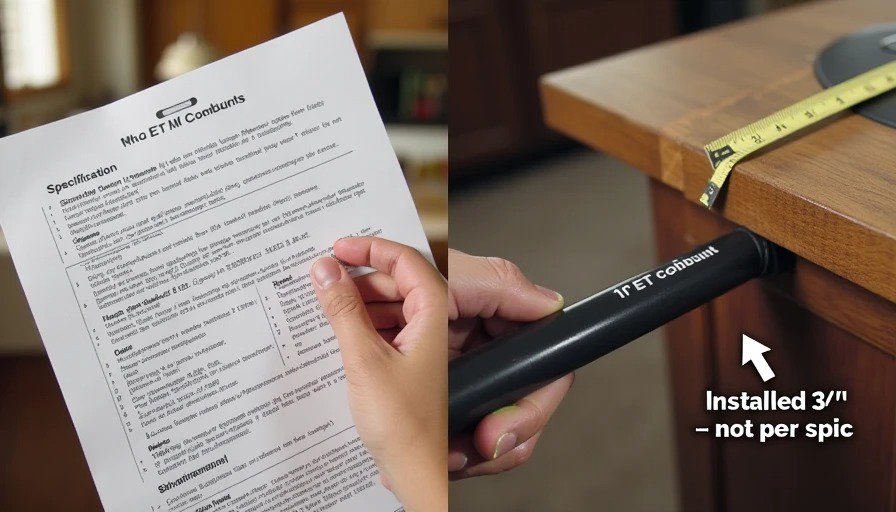
The conduit to the kitchen island was only ¾", not 1". I'd specified 1" – they used what they had on the truck. It's not a dealbreaker, but I was annoyed.
They didn't leave service loops at the wall plates. I'd asked for 2 feet at both ends, but they only left about 6 inches. I couldn't change it without pulling new cable, so I let it go.
The one thing I completely missed:
I forgot to spec a conduit from the panel to the carport for a future EV charger. I thought I'd included it, but when I checked my spec during the walkthrough, it wasn't there. I now have to run an external conduit – which is more expensive and less neat.
What I wish I'd done differently
Demanded service loops. I should have specified a minimum length and had them sign off on it.
Inspected the terminations before drywall. I did a visual inspection, but I didn't test every cable with a cable tester. I ended up re-terminating three cables that failed.
Taken more photos. I took a few, but not enough. I wish I'd photographed every box with the tape measure in the frame – I'd have a permanent record of every location.
Checked the conduit size before they buttoned up. The ¾" conduit in the kitchen isn't a disaster, but it's a reminder to double-check everything.
The final verdict
Did they follow the spec? Yes – 90% of it. The 10% they missed were mostly minor (conduit size, terminations, service loops). The big things – neutrals, conduit, Cat6, panel size – were all correct.
I'm happy with the outcome. I can install any smart switch I want. I can pull new cables to the media wall. I have a network that works. And I didn't have to cut any drywall.
Would I hand them a spec again? Absolutely. But I'd be more specific, more demanding, and I'd check everything before they closed the walls.
What I'd say to someone writing their own spec
If you're about to do this – if you're writing a spec for a new build or a full renovation – here's my advice:
Be specific. Don't say "Cat6" – say "Cat6, 23 AWG, solid copper, CMR-rated, home-run to a 42" enclosure, with a 2-foot service loop at both ends."
Include diagrams. A picture of a switch box with a tape measure is worth a thousand words.
Get it in writing. Email the spec to the builder and get a reply confirming they've received it. This gives you leverage later.
Inspect before drywall. Take photos, test cables, and check conduit sizes. It's easier to fix a mistake when the walls are open.
Be willing to pay. The builder will charge you for extras. Pay them. It's cheaper than cutting drywall later.
Leave room for the next owner. Even if you're not selling, spec for the person who might live here in 10 years. They'll thank you.

No letters yet — pray write the first.