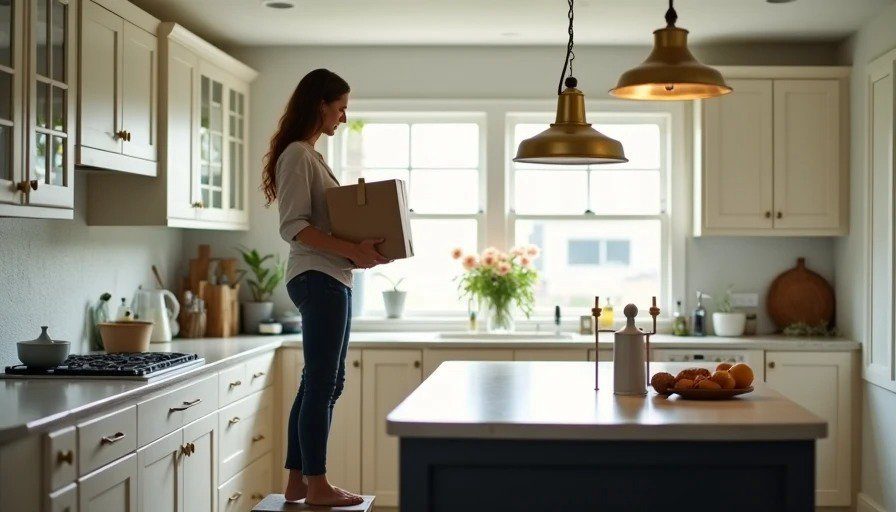
Six weeks ago, I was standing in my kitchen, holding a smart dimmer that I'd just installed, feeling like a genius. The lights dimmed smoothly, the app worked perfectly, and the house was exactly what I'd dreamed it would be.
Then I looked at the rest of the room.
The pendant lights – I'd chosen them based on a single photo online, without seeing them in person. They were too small for the space. The color temperature was wrong. And the brass finish clashed with the rest of the hardware.
I could live with it. I mean, it's just light fixtures. But I didn't have to. Because I was still within the return policy.
So I packed them up, drove to the store, swapped them for something else, and my kitchen looked 100% better.
That moment made me realise: six months in, there are a lot of things I can still change. Some are obvious. Some are subtle. And some I didn't even notice until I'd lived with them for a while.
So here's my list – the things I'm changing while I still can, and the things I wish I could.
The obvious ones – things I already swapped
Light fixtures and bulbs
I replaced 60% of the light fixtures in my house within the first three months. Not because they were bad, but because the way they looked in the showroom was completely different from the way they looked in my living room.
The pendant lights – too small, too cold. I swapped them for larger ones with a warmer finish.
The under-cabinet lights – I'd chosen a strip with a built-in dimmer, but the dimmer was clunky and the color temperature was too cool for the warm wood cabinets. I replaced the entire strip with a more flexible LED tape system.
The bathroom sconces – I'd put them at the standard height, but after living with them, I realised they were too far from the mirror. I moved them down 4 inches. Total cost: a few hours of labour and a touch-up of paint.
What I learned: Light is the most subjective thing in a house. You can't know if a bulb works until you've seen it at 7am, noon, and midnight. Buy a few extras of every bulb type and test them before you commit.
The dimmers
I'd planned to use Inovelli Blue switches everywhere. I did – and they worked fine. But I quickly realised that in the kitchen, I wanted a simpler dimmer that had a physical slider, not a touch interface. And in the media room, I wanted a dimmer that could handle the load of 12 recessed lights without getting warm.
I swapped those two locations for Lutron Caséta dimmers. They're more expensive, but they're also quieter and they don't heat up.
What I learned: One brand doesn't work for every room. Buy one or two dimmers, test them in each location, and be ready to swap them out.
The subtle ones – things I didn't notice until month 4
The outlet placement
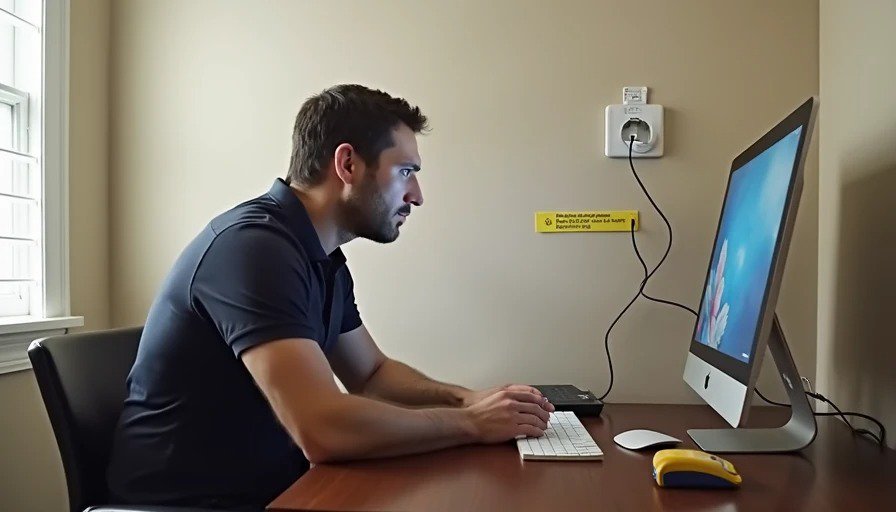
I have an outlet in my home office that's six inches too far from the desk. I have to stretch the power cord across the gap, and it's annoying enough to notice every single day.
I could ignore it. Or I could add a small extension box and move it closer. That's a 15-minute job and $10 in parts. I'm doing it next week.
What I learned: Walk through your house with a lamp and a phone charger. Plug them in everywhere you might want them. If you reach, you'll notice.
The switch height
I'm 6'1". My wife is 5'3". The switches are at the standard 48" height – which is fine for me, but she has to reach a little. In the bedroom, where the switch is next to the closet, she has to stretch.
I could argue that the code says 48". But I could also just move the switch down 4 inches – which makes her life easier, doesn't violate anything, and takes about an hour.
What I learned: The "standard" height might not be the right height for your family. Measure your family's comfortable reach, and adjust.
The fan pull chain
I installed a ceiling fan with a remote – which is great. But the remote is a little fob that sits on my bedside table, and I can never find it in the dark. I wish I'd installed a wall-mounted fan switch instead – the kind that fits in a single-gang box and controls the fan speed and dims the light.
I can still do that, but I need to swap the old switch for a new one. That's a 30-minute job.
What I learned: Think about how you actually use your switches. A remote that's always lost is a bad design.
The unchangeable ones – things I'm just going to live with
The kitchen island pendant placement
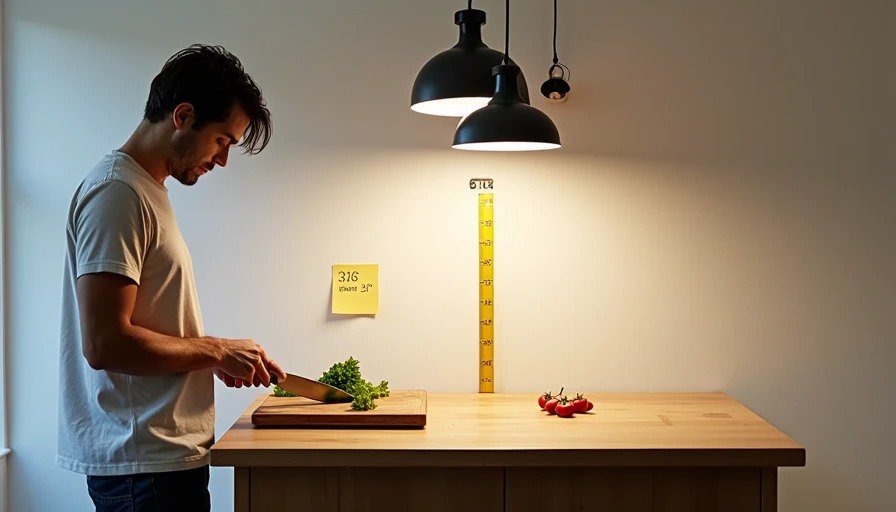
I hung the pendant lights 36 inches above the counter – which is code and standard practice. But after living with it, I realised they're too high. They cast a shadow on the counter, and I have to lean forward to see what I'm slicing.
I could move them down, but that would involve rewiring and patching the ceiling. It's not worth it. I'll live with it and adjust my cutting technique.
What I learned: Standard heights are a starting point, not a rule. If I could redo it, I'd hang them 30 inches above the counter – and I'd test it with a light and a piece of tape before committing.
The bathroom mirror placement
I mounted the mirror centered on the sink, which is the obvious thing to do. But I didn't consider that I have a taller frame and my wife is shorter. When I stand at the sink, I can see myself clearly. When she stands, the mirror reflects the ceiling.
I should have mounted it lower – or bought a tilting mirror. But I didn't. And now I'm stuck with it.
What I learned: Mirror placement is personal. Stand at the sink and test it at your height. Then test it at your partner's height. Compromise early.
The media wall "lip"
I built a media wall with a deep recess for the TV – deep enough to hide the mounting bracket and cables. It looked great on paper. But in practice, it created a shadow ring around the TV because the recess was too deep.
I can't change it without rebuilding the wall. I'll live with the shadow – it's not a dealbreaker. But next time, I'll make the recess shallower.
What I learned: Test every feature with the actual equipment before you finalise the design. A cardboard mockup of the TV and bracket can save you a lot of heartache.
What I'm still in time to change – my to-do list
Here's my current to-do list, all of which is still within the return policy window or can be done with minimal disruption:
Item | What I'm changing | Why |
|---|---|---|
Kitchen pendants | Swapping for a different size/finish | The originals were too small and too bright |
Home office outlet | Moving it 6 inches closer | It's a small daily annoyance |
Bedroom switch | Moving down 4 inches | My wife asked nicely |
Bathroom fan switch | Replacing with a timer | I keep forgetting to turn it off |
Under-cabinet LEDs | Swapping to a warmer temperature | They clash with the wood cabinets |
Garage outlet | Adding an extra one | I have to run an extension cord for the freezer |
All of these are small, cheap, and easy. And they'll make a big difference in how the house feels.
The one thing I'd change if I could
If I had a magic wand, I'd go back in time and add a second dishwasher drawer in the kitchen. We run the dishwasher every single day, and having a second one would let us separate heavy-duty pots from delicate glasses. But that's not a return-policy change – it's a full kitchen renovation.
So I'm just going to be grateful I have one dishwasher and learn to stack better.
What I've learned
The return policy is a safety net. Use it while you can. Buy extra fixtures, test them, and be ready to swap them.
Your habits matter more than your vision. You can't know if a layout works until you've lived in it. Give yourself time to adjust – and permission to change.
Small fixes are worth it. A 15-minute job that removes a daily annoyance is infinitely more valuable than a 3-hour job that makes something slightly prettier.
Don't be afraid to admit you got it wrong. The best renovation is the one that gets better over time. I'm okay with saying "I got that one wrong" – because I'm learning, and my house is better for it.
No letters yet — pray write the first.