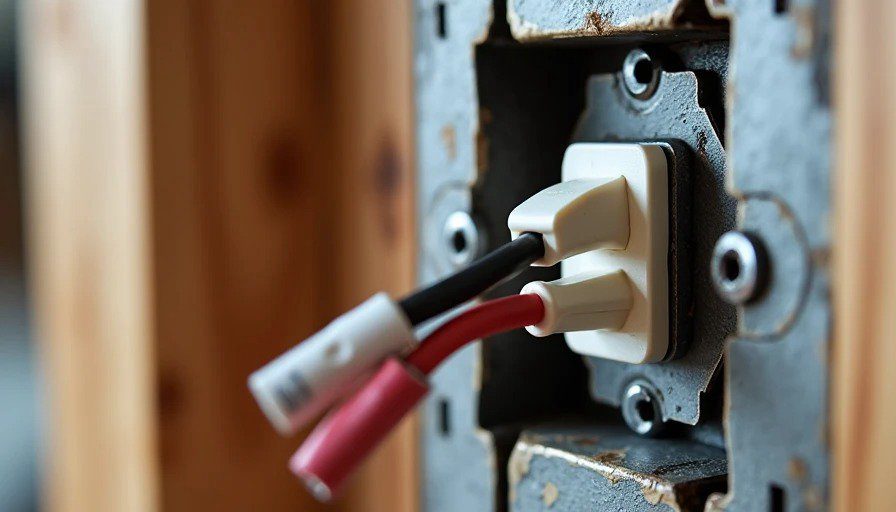
So here's the scene: I'm six months into my renovation, standing in my living room, staring at a bundle of 14-3 wire sticking out of every switch box like a monument to my own over-engineering. I ran 14-3 to every switch location in the house. Every. Single. One. My electrician thought I was insane. My GC asked if I was building a spaceship.
I did it for two reasons: neutral (which I knew every smart switch needs) and 3-way capability (which I knew required a traveler). The neutral part was easy – that white wire is gold. But the traveler? The red wire that's been sitting there unused, coiled up in every box, waiting for a purpose?
Six months in, I've discovered something embarrassing: most smart switches don't use the traveler at all. Not even the ones that support 3-way switching. They use the traveler wire as a signal path in some cases, but in many modern smart switch designs, the traveler is either completely ignored or replaced by wireless communication between switches.
So I did what any obsessive homeowner would do: I researched every major smart switch brand, pulled out my wiring diagrams, and figured out exactly which ones actually use that red wire – and which ones leave it as a decorative copper reminder of my over-spec'ing.
Here's what I found.
The short answer: almost none of them use it the way you think
Here's the thing about traditional 3-way switches: they require a traveler wire to carry power from one switch to the other. When you flip one switch, the traveler carries the signal to the other switch, which then completes the circuit.
Smart switches, by contrast, don't work that way. Most of them use wireless communication between switches – they talk to each other over Zigbee, Z-Wave, or Wi-Fi. Only one switch (the "primary") is actually connected to the load. The other switches are just wireless remotes that tell the primary what to do.
In these setups, the traveler wire does nothing. It's just a spare conductor sitting in the box. You can tape it off, cap it, and forget it exists.
But – and this is a big but – some smart switch brands do use the traveler, either for hardwired 3-way setups or to provide power to the secondary switch. And if you've already run 14-3, you have options.
Brand by brand: who uses the traveler, and how
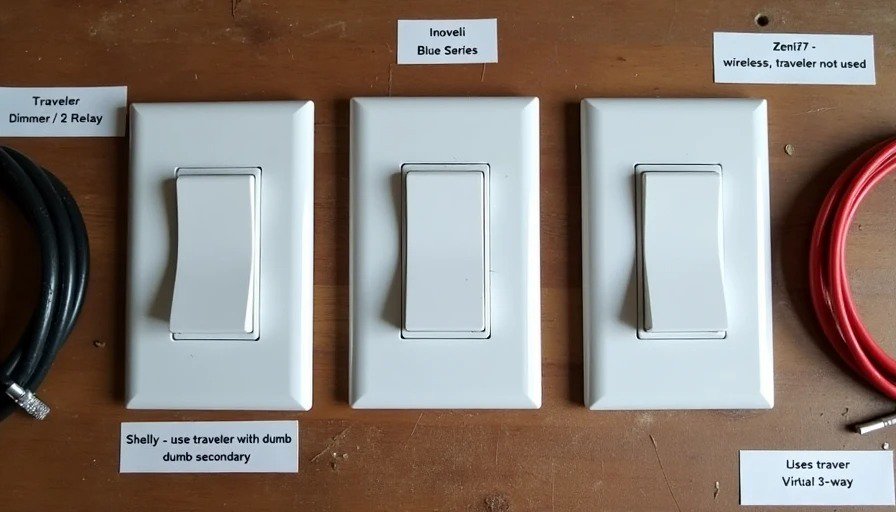
Shelly – yes, but only in certain configurations
Shelly's relays (like the Shelly Dimmer 2 and Shelly 2.5) are designed to be installed behind your existing dumb switches. In a 3-way setup, you can wire the relay at the fixture or at the first switch, and use the traveler to connect the secondary switch to the relay.
Here's how it works: you wire the primary switch (with the relay) to the load, and the secondary switch uses the traveler wire as a signal to the relay – it tells the relay when the switch has been toggled. This is a hardwired 3-way, no wireless required.
The Shelly Dimmer 2 specifically supports this. You'll need to configure it in the app or via web interface to use the "3-way with two switches" mode. It works, but it's not plug-and-play – you need to understand the wiring diagram.
Bottom line for 14-3: Yes, if you're using Shelly relays behind dumb switches, the traveler is useful. If you're using Shelly's full in-wall switches (like the Shelly Plus Wall Switch), they use wireless communication for 3-way – the traveler is not used.
Inovelli – no, they use wireless
Inovelli's Blue Series (Zigbee) and Red Series (Z-Wave) handle 3-way setups differently. In a typical Inovelli 3-way, you install one Inovelli switch as the primary (connected to the load) and another Inovelli switch (or a dumb switch) as the secondary.
If you're using a dumb switch as the secondary, Inovelli supports a "dumb 3-way" mode that uses the traveler wire to carry the signal. This is the traditional hardwired approach, and it works – but you lose some smart functionality (like scene control) on the secondary switch.
If you're using two Inovelli smart switches (one primary, one secondary), they communicate wirelessly over Zigbee or Z-Wave. The traveler wire is not used – it's just capped off.
Bottom line for 14-3: You can use the traveler if you pair an Inovelli primary with a dumb secondary. If you buy two Inovelli switches, the traveler is ignored.
Zooz – yes, and they made it easy
Zooz's 800-series switches (like the ZEN77 dimmer) have a feature called "virtual 3-way." This allows you to use existing dumb 3-way switches as secondaries without any rewiring. The Zooz switch detects the traveler wire, uses it for communication, and automatically configures itself.
In this setup, the traveler is used – but only as a signal path, not for power. The Zooz switch sends a small voltage down the traveler to detect the position of the secondary switch. It's elegant, works with existing wiring, and doesn't require a neutral at the secondary switch.
If you want to use two Zooz smart switches in a 3-way, they also support wireless communication – but you can also wire them with the traveler for a hardwired connection.
Bottom line for 14-3: Yes, the traveler is useful – especially if you're using Zooz with dumb secondaries. This is actually one of Zooz's selling points.
Lutron Caséta – no (unless you use the hardwired kit)
Lutron Caséta is the 800-pound gorilla of smart switches. Their standard approach to 3-way is to use a wireless Pico remote as the secondary – no traveler wire needed. The Pico is battery-powered and sticks to the wall. It's simple and reliable.
However, Lutron does offer a hardwired accessory switch (the WA-100) that uses the traveler wire to communicate with the primary switch. This is a hardwired 3-way without wireless – useful if you want a secondary switch that doesn't require batteries.
Bottom line for 14-3: If you use the hardwired accessory, the traveler is used. If you use the Pico remote, it's not.
TP-Link Kasa – no (mostly)
Kasa's smart switches (like the HS210 3-way kit) use wireless communication between switches. The two switches talk to each other over Wi-Fi (or via a direct wireless protocol). No traveler wire required – you just wire each switch with line, neutral, and ground, and they find each other.
There's no dumb secondary option. You need to buy two Kasa switches for a 3-way, and they don't use the traveler.
Bottom line for 14-3: The traveler is not used. Cap it and move on.
Aqara – depends on the model
Aqara's smart switches (Zigbee) usually support 3-way via their "wireless" or "wired" modes. The wired mode uses the traveler as a signal path to a dumb secondary switch – similar to Shelly. The wireless mode uses Zigbee communication between two Aqara switches.
Bottom line for 14-3: Yes, if you're using a dumb secondary with wired mode. No, if you're using two Aqara switches with wireless mode.
The quick reference table
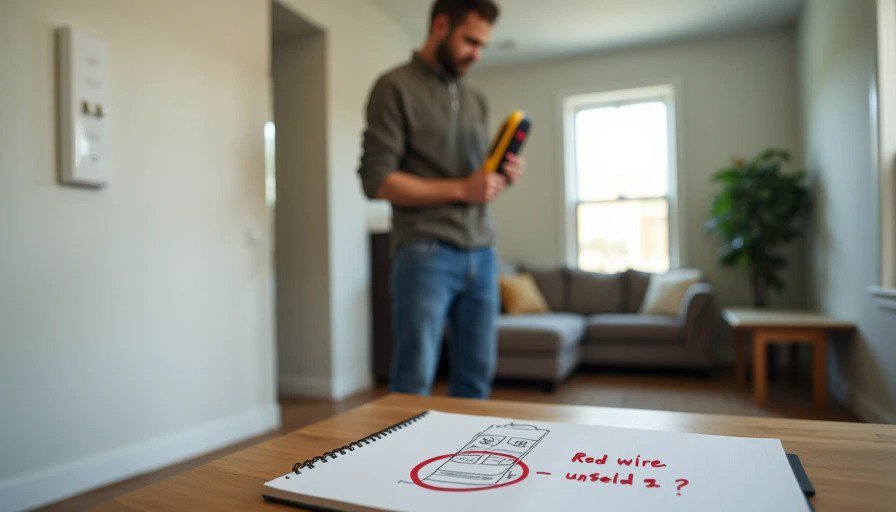
Brand | Uses traveler? | In what configuration? |
|---|---|---|
Shelly (relays) | Yes | Relay + dumb secondary |
Shelly (in-wall) | No | Wireless between switches |
Inovelli | Optional | Only if paired with dumb secondary |
Zooz | Yes | Virtual 3-way with dumb secondary |
Lutron Caséta | Optional | Only with hardwired accessory |
TP-Link Kasa | No | Wireless only |
Aqara | Optional | Wired mode only |
So what do I do with all this 14-3?
First: don't panic. The neutral wire (white) alone made it worth it. Every single smart switch on the market – including all of the above – needs a neutral. So you're already ahead.
As for the traveler (red): it's not wasted. Here are your options:
Option 1: Use a smart switch brand that supports a dumb secondary. Go with Zooz or Shelly (relay + dumb secondary) and your 14-3 will be fully utilised. The red wire will carry the signal, and your setup will be hardwired and reliable.
Option 2: Use two smart switches and ignore the traveler. Many brands (like Inovelli, Kasa, or Lutron with Picos) will work wirelessly. The red wire stays capped, but you still benefit from the neutral.
Option 3: Repurpose the traveler as a switched hot for a future fan. If you're running 14-3 to a switch box, you can use the red wire to control a separate load (like a ceiling fan) while the black wire controls the light. This gives you two independent circuits in one cable. It's not a traditional use of the traveler, but it's creative.
Option 4: Leave it as a spare. You never know when you'll need another conductor. In five years, who knows what new device will require an extra wire? That red wire is your future-proofing.
My personal experience (and my regret)
I wish I'd known this before I ran 14-3 everywhere. Not because it was a waste – I'd still do it for the neutral alone. But I would have designed my 3-way plan differently.
I went with Inovelli Blue Series with wireless secondaries. So my traveler wires are capped and unused. I'm okay with that – the Zigbee communication is reliable and I get scene control on both ends. But I did have a moment of "wait, I paid for all this copper that's doing nothing?"
If I were doing it again, I'd probably go with Zooz in the rooms where I really wanted hardwired 3-way, and use the traveler. And for rooms where I only needed a single switch, I'd still run 14-3 for the neutral – but I'd know the red wire is just a spare.
No letters yet — pray write the first.