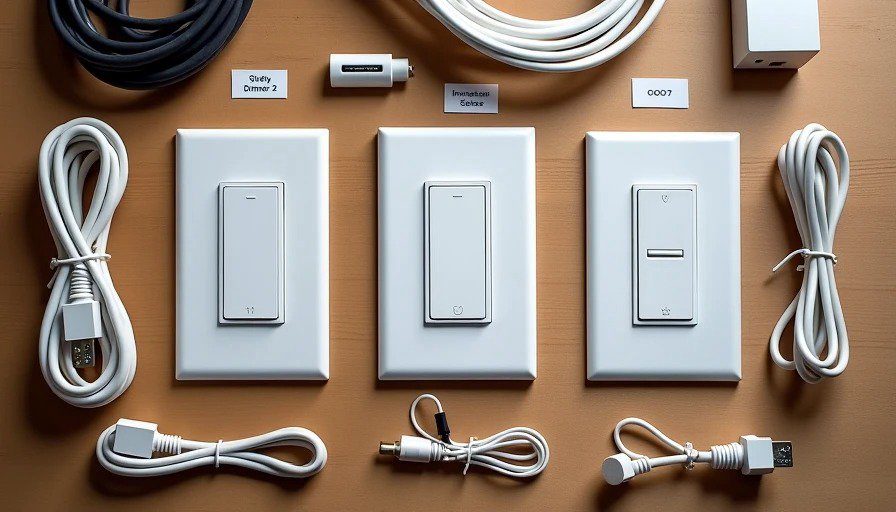
I've been staring at spreadsheets for three weeks. My electrician starts pulling wire on Monday, and I still haven't committed to a smart switch brand. The problem isn't a lack of options – it's that every option seems to come with a compromise. I've narrowed it down to three names that keep coming up in every pre-wire discussion: Shelly, Inovelli, and Zooz.
Each one has a loyal following. Each one claims to be the "most pre-wire-friendly." But 2026 is a different world from 2020 – Thread is real, Matter is (finally) shipping, and Home Assistant has become the default hub for anyone who doesn't want to be locked into a single ecosystem. So I need to make a decision that won't feel outdated in 18 months.
Here's my head‑to‑head breakdown, based on specs, real‑world reviews, and a few conversations with people who've actually installed these in their own homes. I'm posting this to get your feedback before I place the order – because I'm sure I've missed something.
The contenders
Shelly (Bulgarian, owned by Allterco) – The relay company that pivoted into switches. Known for being developer‑friendly, deeply integrated with Home Assistant, and offering both in‑wall relays and full switches. Their big sell: you can keep your existing dumb switches and add smarts behind them.
Inovelli (US‑based, Michigan) – The enthusiast brand. Small company, obsessive community, known for the Blue Series (Zigbee) and Red Series (Z‑Wave). Their claim to fame: insane configurability, a programmable LED notification bar, and a "we listen to our users" ethos.
Zooz (US‑based, part of The Smartest House) – The value champion. Z‑Wave only (for now), known for rock‑solid performance, deep parameter customization, and prices that undercut everyone else. Their 800‑series chips are among the most power‑efficient on the market.
Category 1: Neutral wire requirements
If you're reading this forum, you already know the drill. Some smart switches need a neutral. Some don't. But the ones that don't usually have downsides – they can flicker with LEDs, they don't work well with low‑wattage loads, and they're less reliable in the long run.
Shelly: Their Dimmer 2 and Switch relays (the ones you put behind your existing switch) require a neutral. Their new Shelly Dimmer 3 can work without a neutral in some configurations, but they strongly recommend a neutral for full functionality. If you're running 14/3 or 12/3 as we've discussed – you're fine.
Inovelli: Blue Series (Zigbee) and Red Series (Z‑Wave) both require a neutral. No exceptions. This is actually a feature – they refuse to compromise on dimming quality or reliability. Inovelli's philosophy: if you don't have a neutral, fix that first.
Zooz: Most Zooz dimmers and switches require a neutral. They have a few non‑neutral models (like the ZEN73), but their flagship ZEN77 dimmer requires a neutral. Like Inovelli, they've decided that "no neutral" introduces too many compromises.
Winner: Tie – all three require a neutral for their best products. That's actually good news: it means you're not making a compromise by choosing one over the other based on neutral support. The clear signal: run your neutrals, and you can pick any of these.
Category 2: 3‑way and multi‑way compatibility
If you have a stairway, a long hallway, or a room with two entrances, you need 3‑way (or 4‑way) switching. How each brand handles this is a major differentiator.
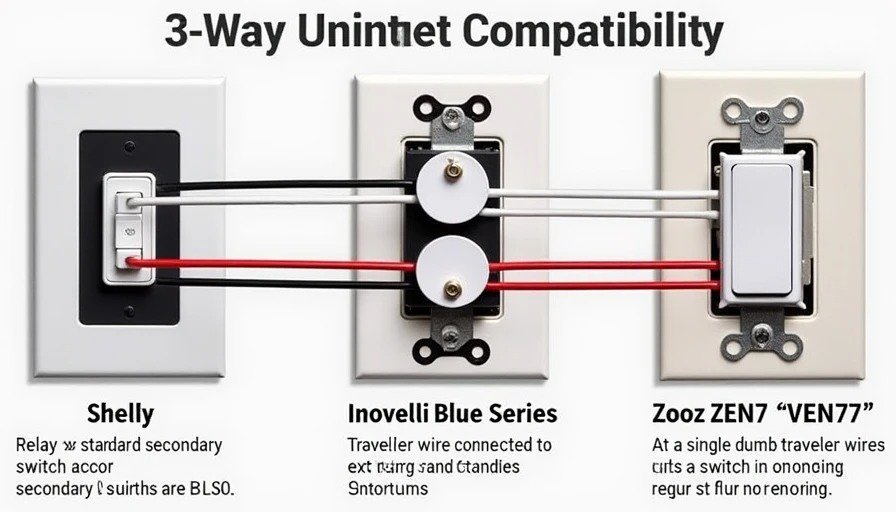
Shelly: The classic approach is to use their relays in the fixture box or in one of the switch boxes, and wire the secondary switches as "dumb" switches that send signals to the relay. You don't need to buy expensive companion switches. This is cost‑effective, but the configuration requires a bit more thought – you need to understand line/load and traveler wiring. The Shelly Dimmer 2 supports 3‑way setups with a single relay and a regular momentary switch.
Inovelli: The Blue and Red Series can be used in 3‑way setups with any existing switch as the secondary. You just wire the primary Inovelli switch in one location, and the secondary switch (which can be a dumb switch or another Inovelli) sends the signal over the traveler wire. This is the "smart home way" – clean, simple, and you get smart functionality from both ends.
Zooz: This is where Zooz shines. Their 800‑series switches have built‑in "virtual 3‑way" capability. You can wire a single Zooz switch as the primary, and your existing dumb 3‑way switches as secondaries – no rewiring required. The Zooz switch detects the traveler wire and handles everything automatically. It's remarkably easy, and it works with existing 3‑way wiring without needing to pull new cables.
Winner: Zooz for the simplest, most backward‑compatible setup. Inovelli is close, but Zooz's virtual 3‑way is a clear differentiator for retrofits. Shelly is fine, but requires more manual configuration.
Category 3: Home Assistant integration
If you're running Home Assistant (and if you're not, you probably should be), this matters a lot.
Shelly: Shelly is a first‑class citizen in Home Assistant. Native integration via the Shelly integration, full local control (no cloud required), and support for every device in the ecosystem. Their devices also have a built‑in web server, so you can access them directly from your browser. The API is open and well‑documented. Home Assistant community loves Shelly.
Inovelli: Inovelli switches work beautifully with Home Assistant – but you need a Zigbee or Z‑Wave coordinator (like a Conbee II or a Zooz stick). Once you have that, the integration is rock‑solid. The configurable LED bar (Blue Series) can be controlled via Home Assistant automations – you can flash the LED when the garage door is open, for example. Very cool, but you're buying into the Zigbee or Z‑Wave ecosystem.
Zooz: Zooz is Z‑Wave only (as of 2026). Works perfectly with Home Assistant via the Z‑Wave JS add‑on. Lots of configurable parameters exposed. Solid, reliable, but if you're leaning toward Zigbee or Thread/Matter, you're locking yourself into Z‑Wave for these switches.
Winner: Shelly – for the native, cloud‑free, HTTP‑based integration that doesn't require a separate coordinator. If you're a Home Assistant purist, Shelly is the most direct path.
Category 4: Price and value
Let's be honest – budgets matter.
Shelly: Shelly Dimmer 2 is about $35–40. Shelly Switch relays are around $30. The full in‑wall switches (like Shelly Plus Wall Switch) are closer to $60. Relays are cheap; switches are mid‑range.
Inovelli: Blue Series (Zigbee) runs about $50–55 per switch. Red Series (Z‑Wave) is similar – around $55. You're paying a premium for the configurability, the LED bar, and the community support.
Zooz: ZEN77 dimmer runs about $45. ZEN76 switch is around $40. Their 800‑series devices are very competitively priced. You can outfit a whole house for significantly less than Inovelli.
Winner: Zooz – best value per feature. Shelly is competitive if you use relays, but if you want a full switch, Zooz is cheaper than Inovelli with similar reliability.
Category 5: Firmware updates and longevity
Shelly: Frequent OTA updates. Their Plus series supports Matter over Thread (with future firmware), so it's likely the most future‑proof. The company is established and profitable, so they're not going anywhere.
Inovelli: The Blue Series (Zigbee) is Matter‑compatible via a firmware update (already released). The company is small, but very dedicated. Their community is fiercely loyal – they've survived supply chain issues and semiconductor shortages through transparency and communication.
Zooz: Solid, but Z‑Wave is not Matter/Thread. The 800‑series chips have great range and low power, but they're not moving toward Matter – they're doubling down on Z‑Wave. That's fine, but if you want a unified future with Thread/Matter, Zooz may not be your long‑term choice.
Winner: Shelly and Inovelli (tie) – both are moving toward Matter/Thread. Shelly has the advantage of being HTTP‑based, which is agnostic. Inovelli has Zigbee, which is widely supported. Zooz is staying with Z‑Wave – a solid choice, but a different path.
The 2026 verdict
Category | Shelly | Inovelli | Zooz |
|---|---|---|---|
Neutral requirement | Requires neutral (best models) | Requires neutral | Requires neutral (best models) |
3‑way simplicity | Fine, but config‑heavy | Good | Best (virtual 3‑way) |
Home Assistant integration | Native, cloud‑free | Great (needs coordinator) | Great (needs Z‑Wave stick) |
Price (per switch/relay) | $30–60 | $50–55 | $40–45 |
Future‑proof (Matter/Thread) | Plus series supports Matter | Blue Series supports Matter | Z‑Wave only |
Best for | Home Assistant purists, tinkerers | Enthusiasts who want config and LED bling | Budget‑conscious, simple setups |
My decision (and I want your feedback)
I'm leaning toward Shelly – specifically, Shelly Dimmer 2 relays behind my existing dumb switches, combined with Shelly Plus Wall Switches in high‑use areas.
Why? I'm a Home Assistant user. I like the idea of cloud‑free, HTTP‑based control. I don't want to buy a separate Zigbee or Z‑Wave coordinator if I can avoid it (though I have one anyway). And I like that Shelly is moving toward Matter – it feels like the most future‑proof path.
But I'm nervous about the 3‑way complexity. And I'm wondering if the Inovelli Blue Series with its LED bar would actually be more useful in daily life. Or if Zooz's virtual 3‑way would save me headaches with my existing dumb travelers.
So here's my question to you – if you've actually installed any of these:
Shelly users: How much of a pain is the 3‑way setup? Is it something I'd get used to, or is it genuinely annoying?
Inovelli users: Is the LED bar actually useful, or is it a neat trick you forget about after a week?
Zooz users: Is virtual 3‑way as simple as it sounds? Any hidden downsides?
And the big one: If you had to re‑wire a whole house today, would you pick the same brand – or switch to one of these others?
I'll be updating this thread once I've made my purchase and done the install. But right now, I'm still on the fence – and your experience could tip the scale.
Over to you – what's your daily driver in 2026?
No letters yet — pray write the first.